About me
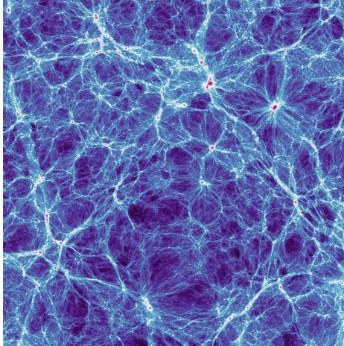
I am a cosmologist at the intersection between theory and observation. My research centres around understanding the Universe as a whole, from the largest possible scales to the scales of galaxies. I aim to uncover what the Universe is really made of by mapping its vast cosmic web and teasing out the hidden influence of dark matter and dark energy on billions of galaxies. By turning huge sky surveys and space-telescope images from the ESA Euclid and the James Webb space telescopes into tracers of how the scaffolding of the cosmos grows and bends light (see the illustration below), I build the rigorous groundwork needed to test whether our current picture of the Universe and gravity is truly right, or if something fundamental is still missing.
Specifically, I am interested in dark matter and its effect on the formation of large-scale and small-scale structure around galaxies. I model the observable effects such as strong gravitational lensing, weak gravitational lensing, and galaxy clustering. To this end, I develop simulations as well as Bayesian simulation-based inference pipelines with galaxy surveys such as Euclid, COSMOS-Web, and the Kilo-Degree Survey in mind, together with various other projects.
Recent talk
Simulation-based inference with KiDS
Here is an example of one of my recent talks.
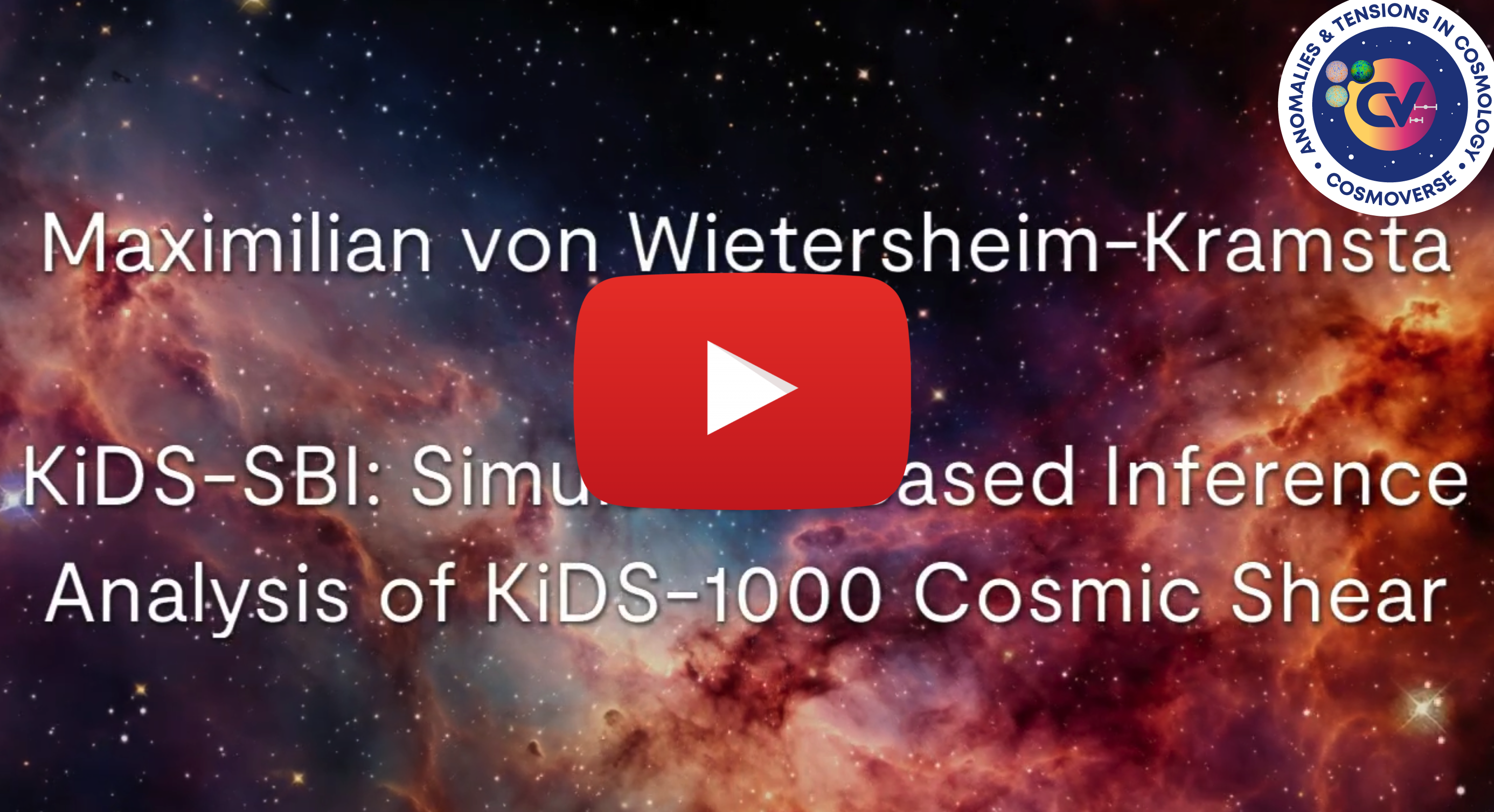 Watch on YouTube, Simulation-Based Inference Analysis of KiDS
 Collaborations
I am a member of



Public engagement
Bringing the dark Universe to the public
I recently had the chance to partake in the Royal Society Summer Science Exhibition through two stands, one for each side of my work. Explore the live exhibits below.
Royal Society Summer Science
Universe Makers
A public showcase of the simulating and modelling side of my work. Run cosmic simulations, from the growth of the cosmic web to the diversity of galaxies and planetary impacts, and see how we build synthetic universes to understand the real one.
Explore the exhibit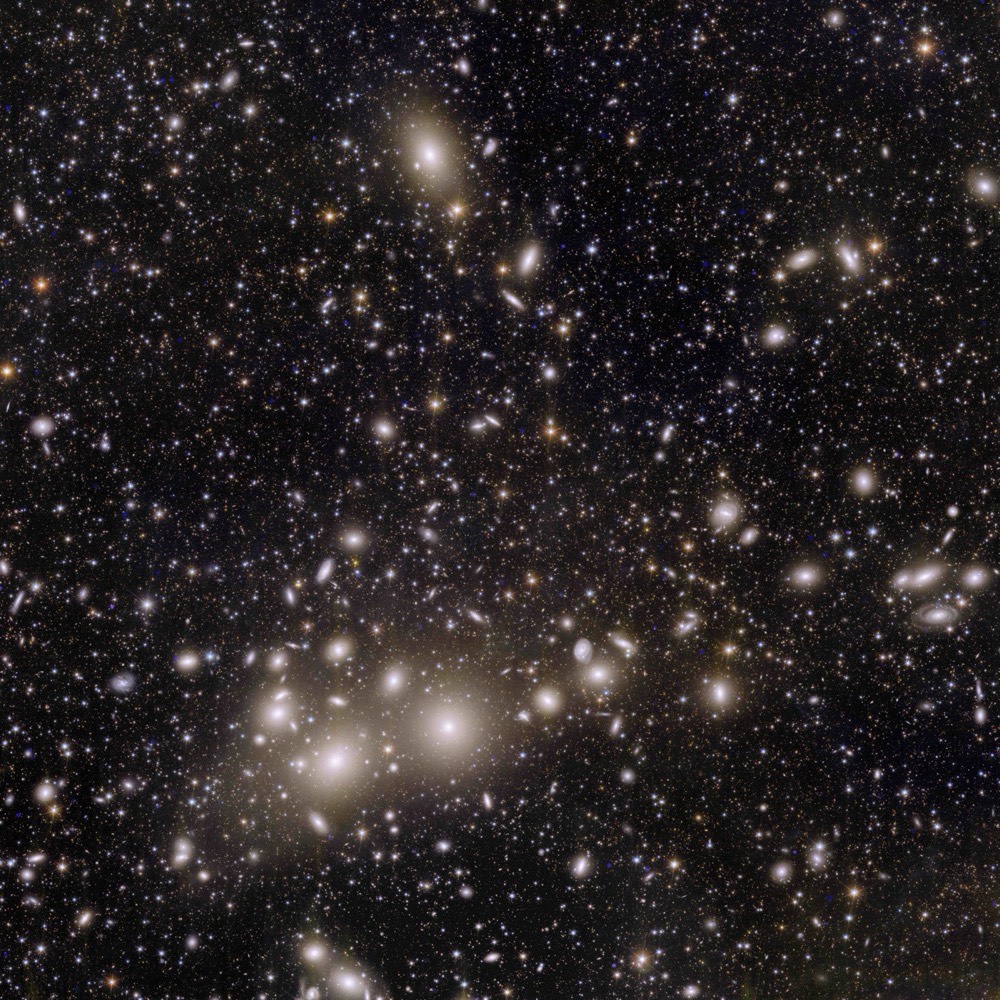
Royal Society Summer Science
Euclid: The Dark Universe Detective
A public showcase of the observational side of my work. Step into ESA's Euclid mission as it hunts for dark matter and dark energy across billions of galaxies, turning deep images of the sky into clues about what the cosmos is made of.
Explore the exhibitHow do we detect dark matter?
Seeing the invisible with gravitational lensing
Dark matter is essentially invisible. To find it, we must look for its effects on the surrounding stars and galaxies. In fact, the gravity from dark matter bends the light of galaxies behind it in a phenomenon called gravitational lensing. By measuring the distortions in the background galaxies caused by the foreground dark matter, we can map where the invisible dark matter actually is, just like in the animation below.
How did we get here?
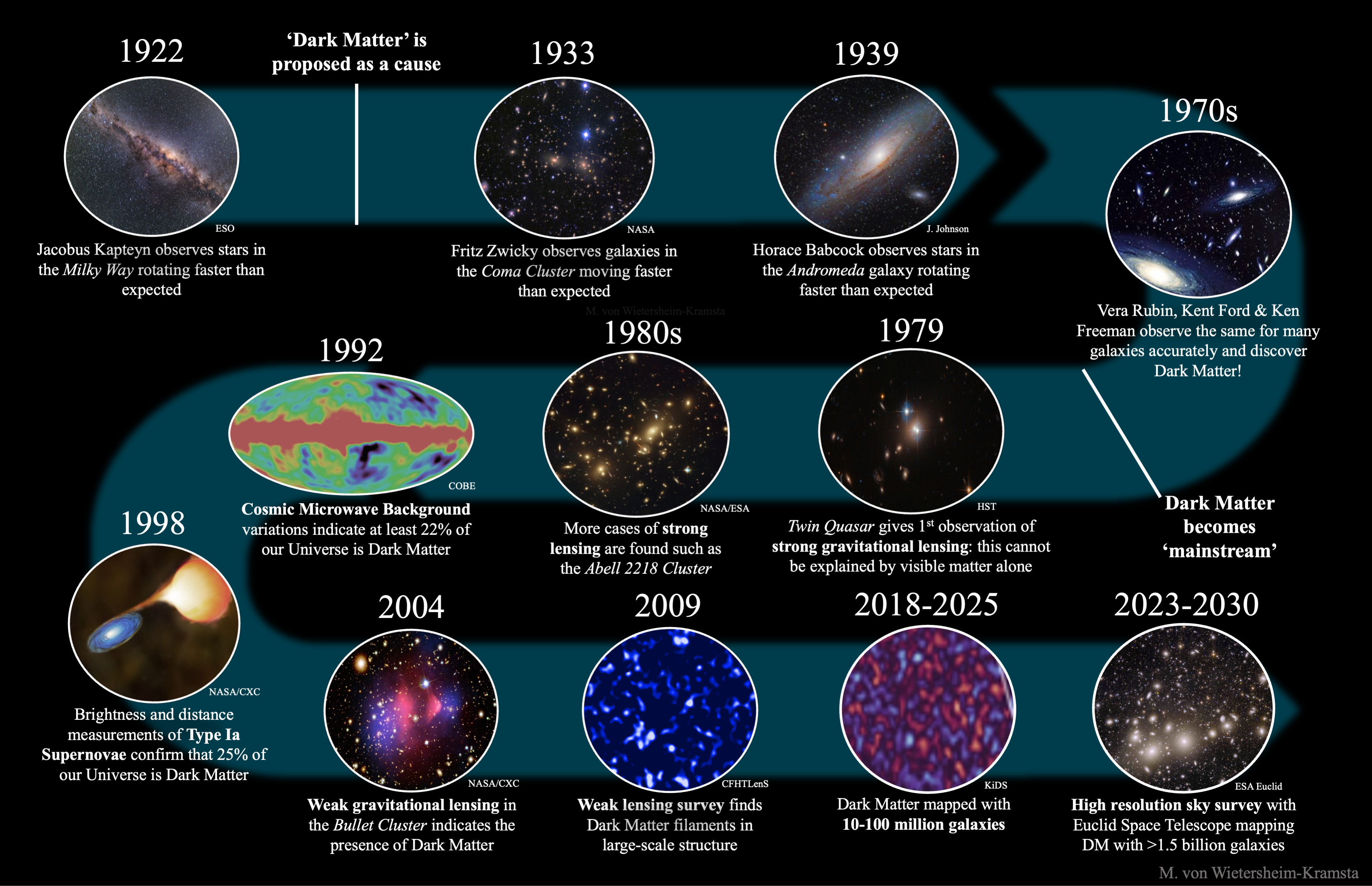
A very brief history of dark matter
My research revolves around understanding dark matter and how it bends light through gravity. Below is a broad overview of some of the observational evidence for dark matter uncovered over the last century.